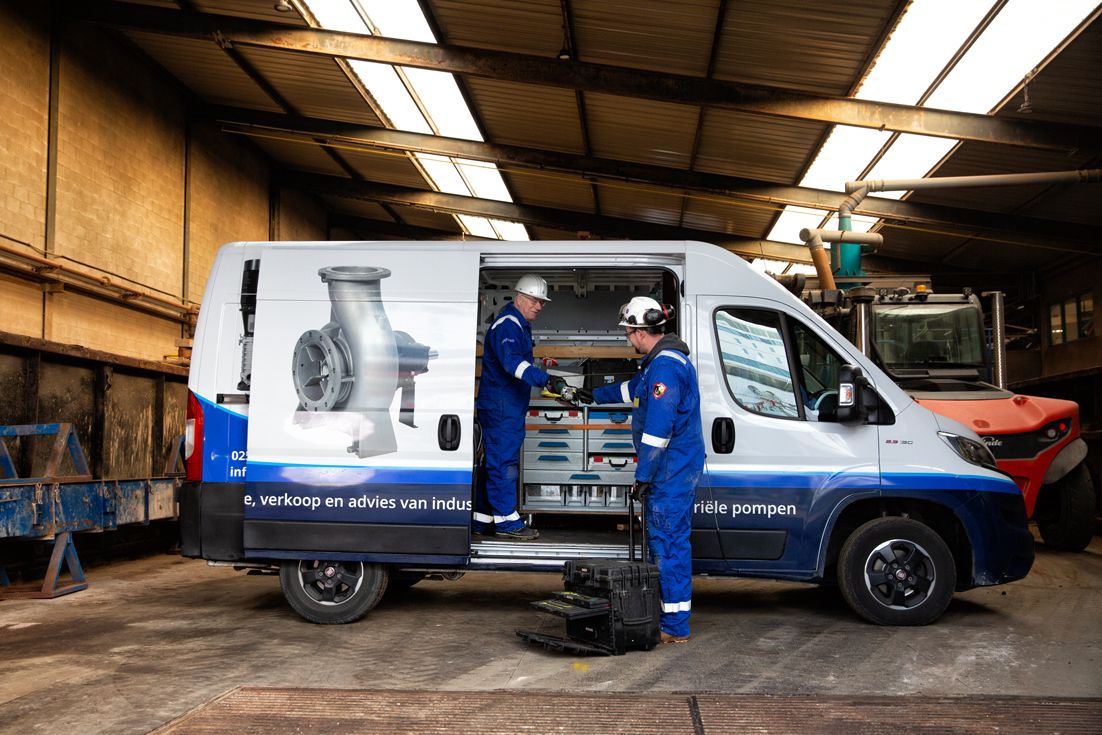

Risks and Solutions
Correct vs Incorrect Maintenance of Lowara Pumps
The difference between correct and incorrect maintenance of a Lowara pump lies in structure, frequency, and technical expertise. Correct maintenance of Lowara pumps is preventive, periodic, and based on inspection and measurements. Incorrect maintenance, on the other hand, is reactive, irregular, or carried out without a thorough analysis of wear and operational load.
With correct maintenance, wear parts are replaced on time, the pump is properly aligned, vibrations and leakage are checked, and the installation is evaluated for optimal performance. With incorrect maintenance, warning signs such as unusual noise, leakage, or reduced capacity are ignored. This significantly increases the risk of failures, unexpected downtime, and high repair costs.
For companies where continuity is critical, this difference has a direct impact on reliability and cost control.
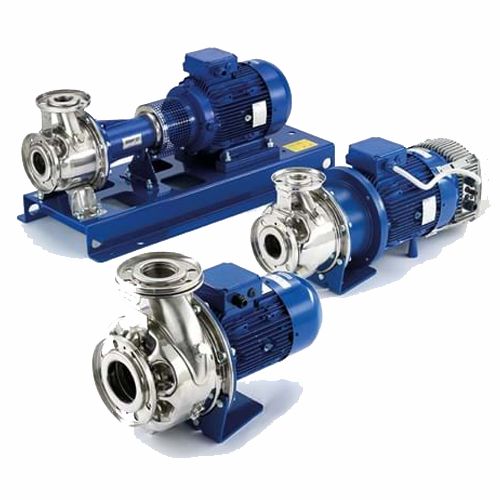
Risks of Incorrect Maintenance: Impact on Performance and Service Life
The risks of improper maintenance of Lowara pumps are often greater than expected. Poor maintenance not only shortens service life, but also reduces efficiency and increases energy consumption.
Common consequences of incorrect maintenance include:
-
Accelerated wear of bearings and seals
-
Imbalance and vibration issues
-
Cavitation caused by improper settings
-
Unexpected leakages
-
Complete failure during production
For example, a minor leakage that is not addressed in time can lead to damage to the bearings or shaft. What starts as a relatively simple service intervention can develop into a costly overhaul or even full replacement.
Higher costs resulting from incorrect maintenance are often indirect. Consider production downtime, urgent spare parts deliveries, and temporary emergency solutions. For this reason, structured Lowara pump maintenance is not a cost burden, but an investment in operational reliability.
The Importance of Structured Inspection and Periodic Maintenance
Structured inspection of Lowara pumps forms the foundation of reliable operation. Through periodic maintenance based on a clear maintenance schedule, early signs of problems can be detected in time.
A well-designed maintenance schedule for Lowara pumps includes:
-
Visual inspections for leakage and wear
-
Inspection of bearings and seals
-
Vibration measurements
-
Alignment of motor and pump
-
Verification of capacity and pressure
-
Evaluation of operational conditions
Periodic maintenance of Lowara pumps prevents small deviations from developing into major failures. It also contributes to longer technical service life and more stable performance.
In sectors such as industry, utilities, and water treatment, predictability is essential. A planned inspection is always more cost-effective than unplanned downtime.
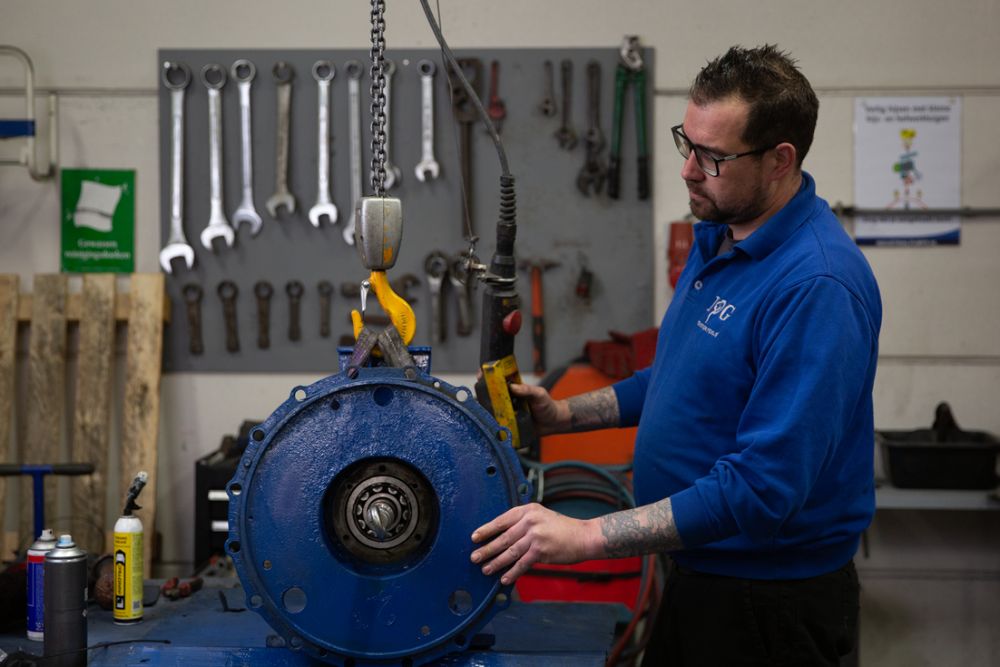
How IPG Ensures Correct Maintenance Through Service and Inspection
IPG maintains Lowara pumps using a structured and transparent approach. As a full-service partner, we combine inspection, service, overhaul, and the supply of spare parts or new pumps.
Our approach includes:
-
Technical inspection on site or in our workshop
-
Reporting with findings and recommendations
-
Preventive maintenance or targeted overhaul
-
Optimization of installation and operating conditions
-
Periodic follow-up according to a maintenance plan
Lowara pump service by IPG means you have a single point of contact for both maintenance and replacement when required. We provide objective advice and always focus on the most cost-effective long-term solution.
Practical Examples Where Maintenance Is Crucial
In the wastewater industry, pumps often operate continuously under heavy load. During a periodic inspection at one client’s site, early wear of the mechanical seal was detected. By intervening in time, IPG replaced the seal before leakage and bearing damage could occur. As a result, the installation remained operational and high repair costs were avoided.
In an industrial production environment, misalignment of the drive system caused increased vibration levels. Thanks to inspection and correct maintenance of the Lowara pump, proper alignment was restored, resulting in reduced bearing load and more stable operation.
These practical examples demonstrate that effective pump maintenance directly contributes to reliability, safety, and cost control.